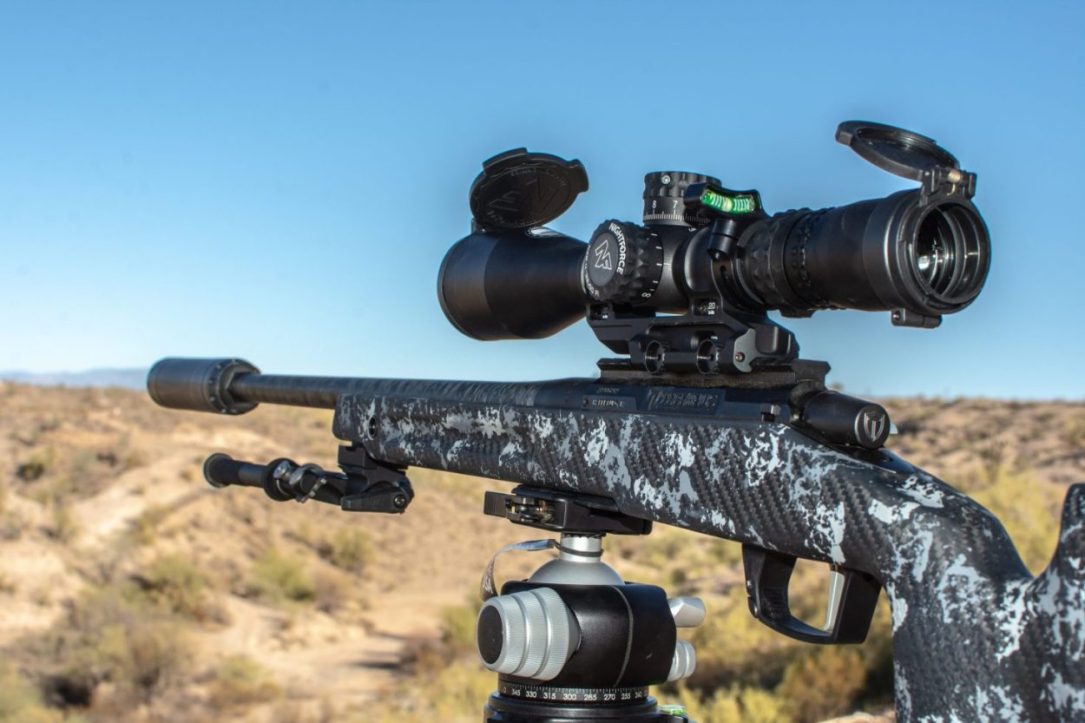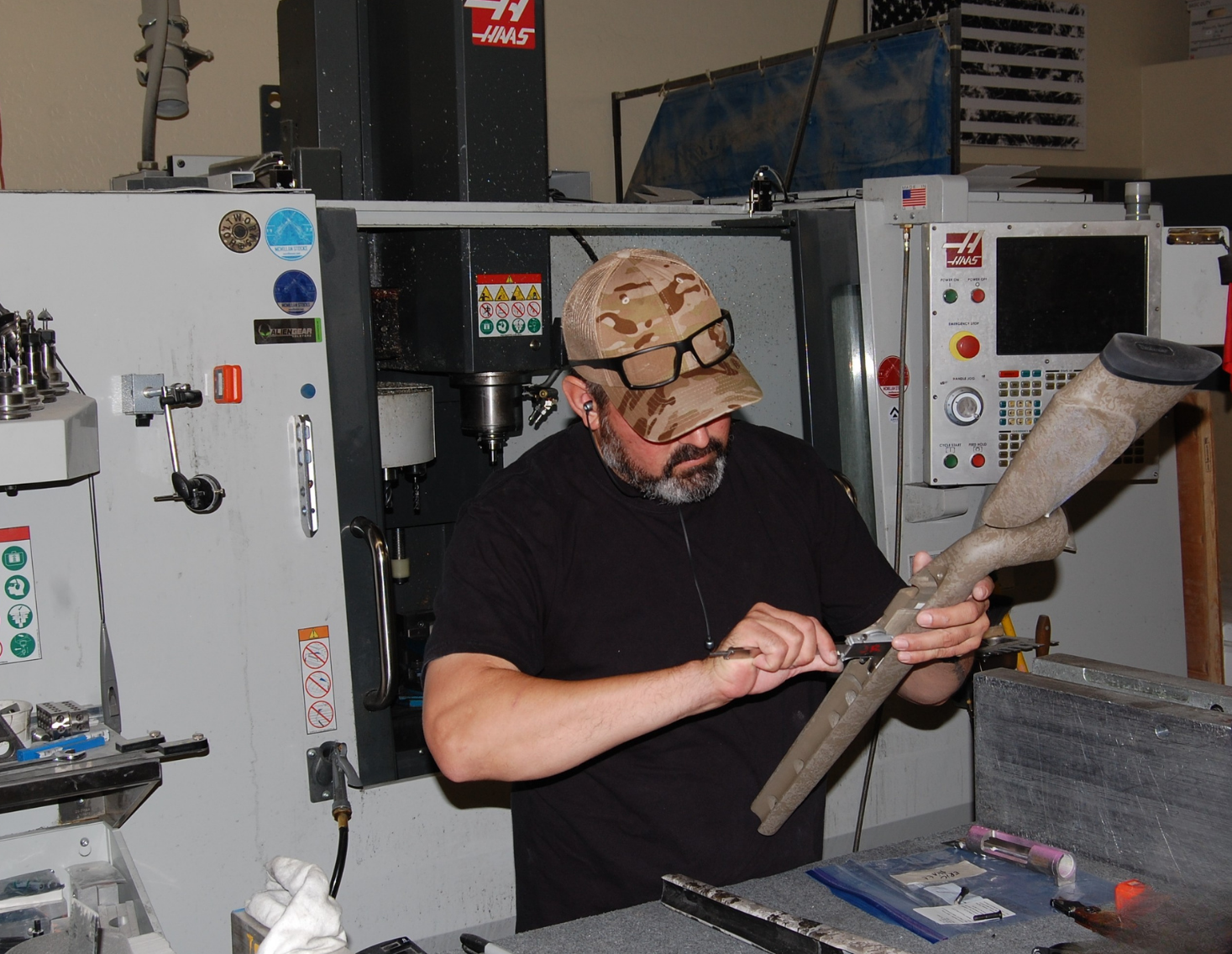
What Makes a Rifle Accurate or “Precision” by Design?
After 15 years of building custom stocks for competition shooters, hunters, mil/le operators and long-range enthusiasts, I get some version of the following question almost every week: “If I get a custom stock, will my rifle shoot better?”
The honest answer is, it depends on everything else, too.
Precision isn’t one part; it’s five systems working together. A rifle is only as accurate as the weakest link in a chain that runs from the chamber to the shooter’s eye. As a stock maker, I spend my days on one link in that chain, but I can’t do my job well without understanding all the others. Let’s talk about what “precision” means and where it comes from.
Precision vs. Accuracy: They’re Not the Same Thing
These terms get used interchangeably, but they describe two different things, and serious shooters are looking for both.
- Precision is consistency. How tightly your shots group together, shot after shot.
- Accuracy is correctness. How close your shots are to the point of aim.
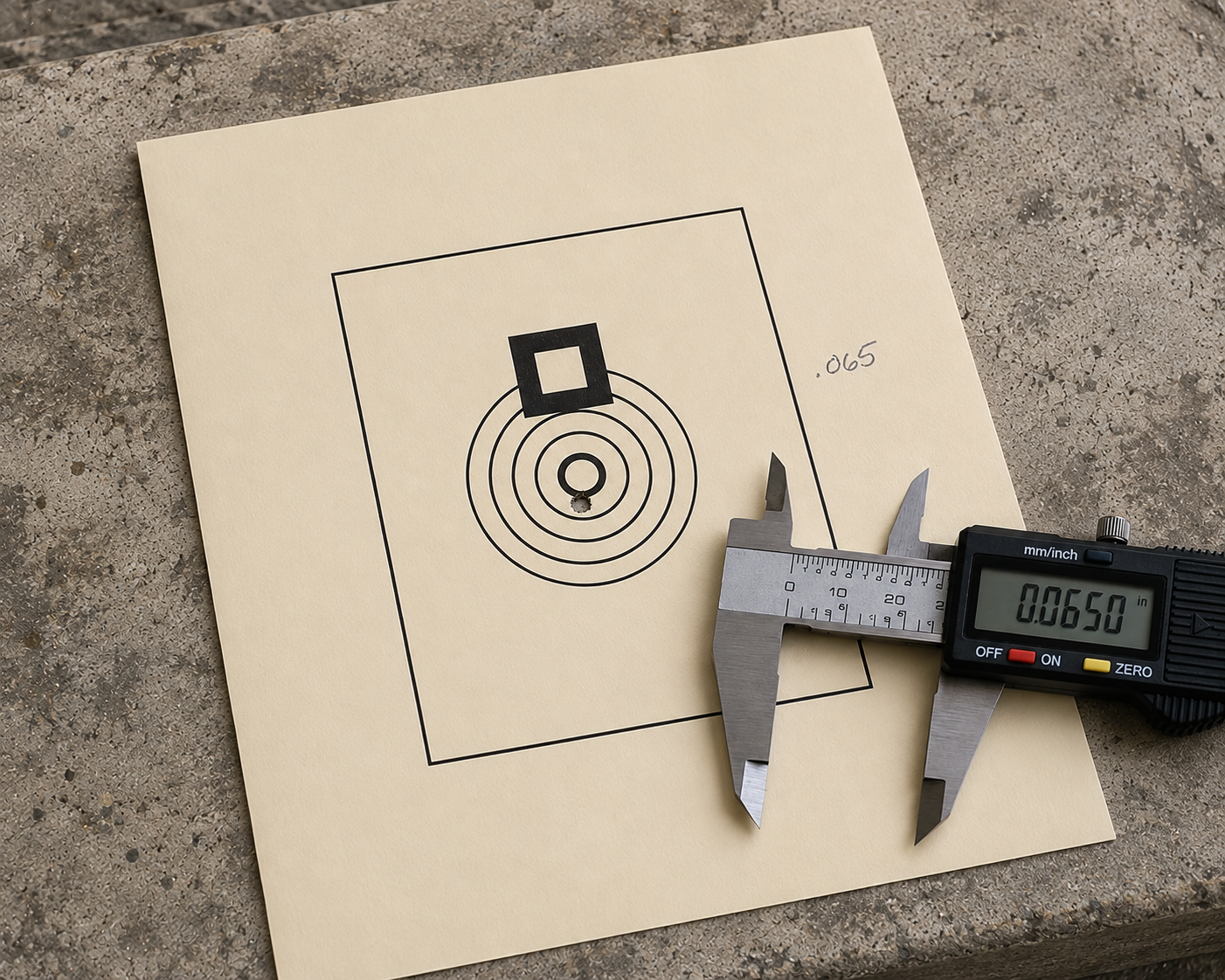
A rifle is considered accurate or precision-oriented by design when its engineering, materials, and manufacturing processes minimize variables that affect bullet flight. Precision is measured by the rifle’s ability to produce small, repeatable shot groups, while accuracy refers to how closely those shots align with the intended point of impact. Modern precision rifles achieve this through several technical design elements.
The Five Systems That Determine Precision
The Barrel
The barrel is a significant contributor to a rifle’s mechanical precision; it is where the bullet gets its spin, speed, and initial trajectory. Barrel quality, contour, twist rate, crown condition, and how well it’s fitted to the action all matter enormously. A cheap, poorly lapped or an inconsistent bore will never shoot as well as a quality precision barrel, no matter what you build around it.
Material
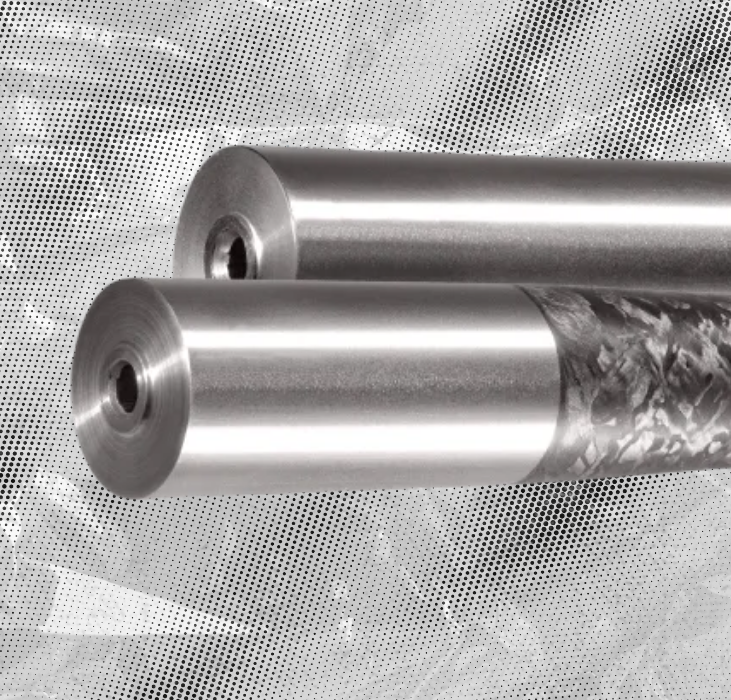
- 416R Stainless Steel – commonly used for precision barrels because of its excellent machinability and dimensional stability. Metallurgists engineered this specific type of stainless steel explicitly for the firearms industry. It’s the barrel most shooters reach for when the whole goal is the smallest possible group on paper.
- Chrome-Moly Steels (4140/4150) – offer excellent durability but are less common in match rifles, but incredibly common in factory rifles and hard-use tactical platforms. 4150 steel has slightly more carbon than 4140, making it even tougher. That toughness is why it’s the barrel you want when the rifle needs to get dragged through mud and abused for years and still run.
- Carbon Fiber Wrapped Stainless Steel – 416R stainless steel wrapped in carbon fiber combines the dimensional stability and machinability of a match-grade steel core with a cured composite shell, cutting significant weight while maintaining excellent stiffness and effective thermal management based on construction.
Manufacturing Methods
- Button Rifling – an ultra-hard tungsten carbide “button” that features a mirror-image of the rifling profile is mechanically pushed or pulled through the drilled bore under immense hydraulic pressure. It does not cut the metal; instead, it uses extreme pressure to displace and stamp the grooves into the steel.
- Single-Point Cut Rifling – is the oldest method of rifling, dating back hundreds of years, but it remains a common method in making elite custom match barrels. A mechanical hook cutter passes through the barrel, shaving out a single groove just 0.005″-0.010″ deep with each pass. The machine indexes, cuts the next groove, and repeats this until the desired depth is reached.
- Cold Hammer Forging / CHF – this modern, highly automated technique is designed for high-volume production where barrel longevity and extreme ruggedness are paramount. A short, thick steel blank with an oversized hole is slipped over a tungsten carbide mandrel. The mandrel contains a raised, reversed image of the rifling. Massive rotary hammers beat the outside of the steel blank hundreds of times per minute, compressing the steel onto the mandrel to shape the inside and outside of the barrel simultaneously.
- Carbon Fiber Wrapped Barrels – start with a match-grade 416R stainless steel core that is turned down on a lathe to a much thinner profile than a standard heavy barrel. Computer-controlled winding machines then wrap that steel core with high-strength carbon fiber filaments saturated in a high-temperature resin. The fiber isn’t just wound for looks; it’s oriented in helical and axial patterns engineered to increase stiffness and influence the barrel’s vibrational behavior. From there, the barrel is heat cured, bonding the composite to the steel liner into one solid unit, then machined to final dimensions for a precise fit, resulting in a barrel that delivers much of the stiffness and precision potential of a heavier steel barrel while weighing substantially less. That reduced weight makes the rifle easier to carry in the field, and the composite construction can help manage heat and maintain consistent barrel harmonics during extended shooting, depending on the specific barrel design.
Technical Factors That Matter Most
- Twist Rate (how many inches of barrel it takes the rifling to complete one full turn) – should stabilize the bullet you’re shooting. A 1:8″ twist stabilizes heavier, longer bullets (typically 175-225 gr in .308/6.5mm-class cartridges). A 1:10″ or 1:12″ stabilizes lighter, shorter bullets. Under-stabilized bullets can keyhole (tumble sideways in flight and hit the target off-axis instead of point-first) or open group size significantly at distance. Before you choose your bullet, check the twist rate recommendation from the bullet maker for the specific bullet weight and length you want to shoot, not just the cartridge it’s chambered in, since two bullets in the same case can require different twists. You can shoot bullets in a twist that is faster than recommended but you risk poor precision. The faster a bullet spins the more the imbalance around the axis of the bullet will pull the bullet out of the group. No bullets are perfectly balanced around the axis. Some are better than others. Having the correct twist means your bullets won’t keyhole and you’ll get the most out of your precision potential.
- Bore and Groove Dimensions – on a quality precision barrel typically hold within about ±0.0002″-0.0005″ along the full length. High-volume, mass-produced barrels can vary more than this, which shows up as inconsistent velocity and vertical stringing (shots landing higher or lower than intended). The vertical dispersion is the flier you might blame on the wind or how you handle the rifle through the shot. If the rifle never shoots flat, it may be the barrel.
- Chamber Concentricity (how evenly centered the chamber is around the bore’s centerline): a well-cut chamber should run concentric to the bore within roughly 0.0005″ or better. An off-center chamber lets the bullet enter the rifling asymmetrically, a common cause of unexplained flyers.
- Barrel Channel Clearance – a free-floated barrel is typically 0.020″-0.060″ of clearance around the full length of the barrel, enough that the barrel never contacts the stock even as it heats and moves under a string of fire. This is the difference between your zero holding through a 20-round string and your point of impact walking as the barrel warms up on a hot range day.
- Crown Condition (the precisely machined edge at the muzzle where the bullet exits) – matters more than most people expect. Even a 0.001″-0.002″ ding or unevenness at the muzzle can open groups noticeably, since escaping gas pushes unevenly on the base of the bullet as it exits. The good news is this is one you actually control. Keep a muzzle cover on during transport and storage, clean from the chamber end whenever the rifle’s design allows it instead of dragging a rod out through the muzzle, and set the rifle down muzzle-up instead of resting it on the crown. If you ever suspect a ding, re-crowning is a quick, inexpensive fix, one of the cheapest ways to bring a barrel back to full potential instead of chasing a mystery accuracy problem everywhere else.
- Barrel Contour and Length – influence barrel stiffness, vibration characteristics, and how the barrel responds to heat. Heavier contours are stiffer and generally produce less barrel deflection and smaller vibration amplitudes than lighter sporter profiles, while also providing greater thermal mass to help limit heat-related point-of-impact changes. Barrel length also affects stiffness, velocity, and overall balance, so precision builds commonly use medium-to-heavy contours and lengths around 24″-26″, depending on the cartridge, intended use, and desired balance.
The Action
The receiver acts as the structural backbone of the rifle. It sits in the stock, houses the bolt, locks up with the barrel and mounts the scope. What matters here is rigidity and consistency. A precision action holds all these components together while delivering consistent ignition control, so it shoots the same way every single time.
Material
- 416R Stainless Steel – used in the receiver because it is corrosive resistant, machinable, and is able to handle very cold temperatures and high heat.
- Chrome-Moly 4140 Steel – often used in the bolt for its hardness and strength giving it the ability to withstand the repeated stresses of firearm operation.
- 4340 Alloy Steel – is used for it’s combination high strength, toughness, fatigue resistance, and hardenability, providing a durable foundation for an action that must withstand repeated firing and locking forces.
- Titanium – can also be used, offering the strength and corrosive resistance of steel with significant weight reduction.
- Aluminum – used as a sleeve for certain steel actions to reduce weight and increase bedding surface.
Manufacturers often coat these materials using various methods.
- Cerakote – is a sprayed-on high-performance ceramic coating. Benefits: wide color and camo pattern options, strong corrosion and abrasion resistance. Applications: hunting rifles that need to blend into terrain or handle weather, duty and tactical builds where color and durability both matter, and refinishing an older action back to a like-new, protected surface.
- Nitride (not an actual coating) – a heat-treating process that uses NH3 or ammonia. Benefits: significantly hardens the metal’s surface for wear resistance, improves corrosion resistance, and adds essentially no measurable thickness, so it doesn’t affect tight machined tolerances. It’s also one of the more affordable treatments. Applications: bolt bodies, rails, and other high-friction moving parts where smooth, reliable cycling over tens of thousands of rounds matters.
- Diamond Like Carbon – a combination of carbon atoms (arranged in a mix of graphite-like and diamond-like bonds), hydrogen, silicon and metals applied in a vapor chamber. Benefits: an extremely low coefficient of friction for the smoothest possible bolt cycling, along with exceptional hardness, wear resistance, and corrosion resistance. Applications: high-end custom actions and bolt bodies where minimizing friction directly improves reliability, and competition rifles that get run hard, round after round, without a break-in period to smooth things out.
Manufacturing
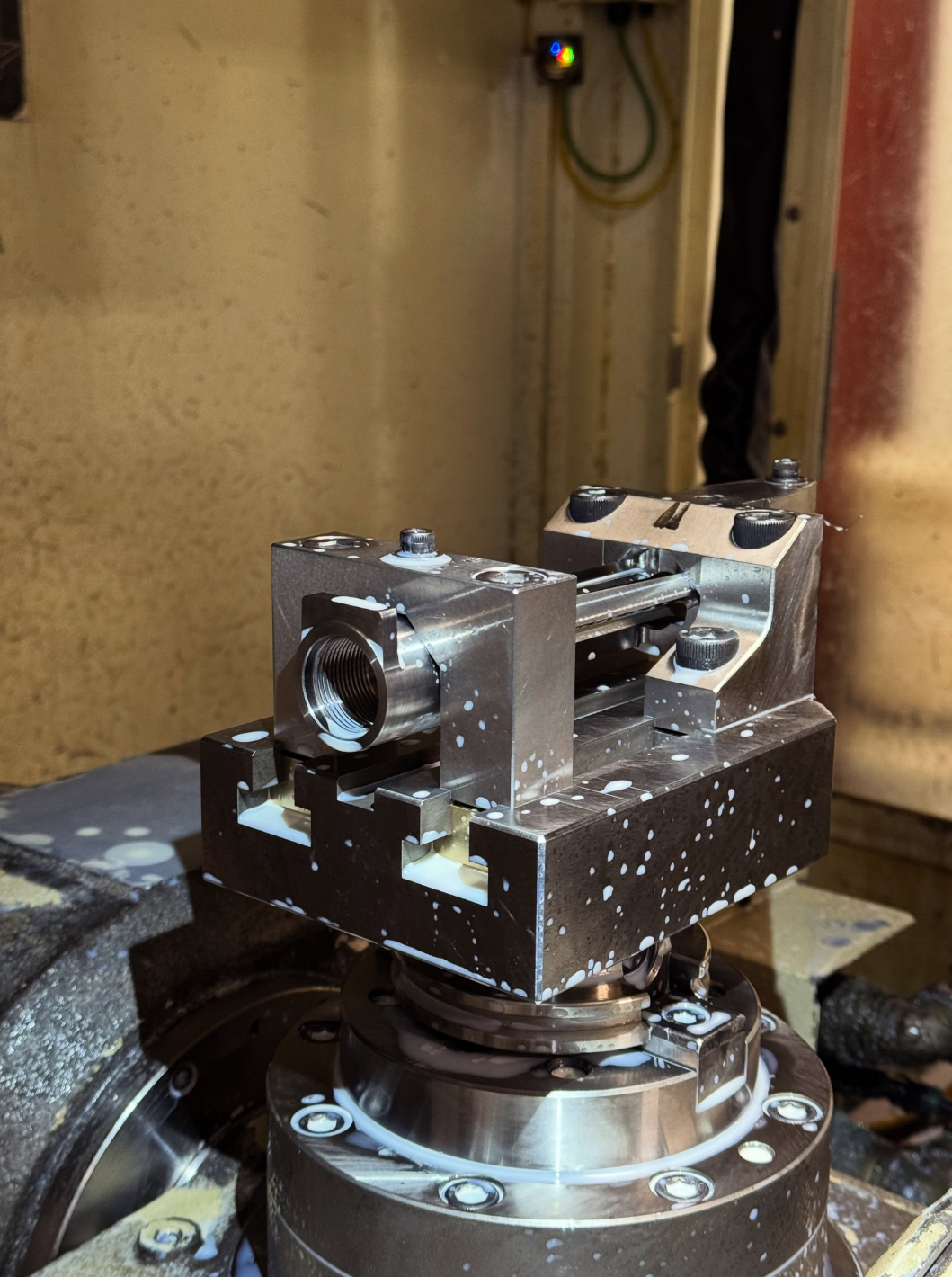
Actions machined from a single billet (one solid block of raw metal, not a casting) generally exhibit higher rigidity than cast receivers, which is why custom precision rifle actions are machined. Manufacturers machine the actions using CNC machines (computer-controlled machines that cut metal to exact digital specifications), high-quality machining techniques, and quality controls that ensure tight tolerances and reliability. A billet action doesn’t flex where a cast one does, and that rigidity is what keeps your point of impact from drifting as the rifle heats up and cools down over the course of a match or a long day of shooting. Billet isn’t the only way an action gets made. Investment casting pours molten metal into a ceramic mold shaped like the finished part, and metal injection molding (MIM) injects powdered metal mixed with a binder into a mold before sintering it under heat. Some factory actions are also forged, hammered, or pressed into rough shape under heat before final machining. Casting and MIM are faster and cheaper, which is why they’re common on factory and budget actions, but neither matches the density and structural consistency of an action machined from a solid billet.
Technical Factors That Matter Most
- Receiver squareness – the front receiver face should be trued perpendicular to the bore axis, typically held within about 0.0005″ of true. An out-of-square receiver face causes uneven barrel tenon (the threaded portion of the barrel that screws into the action) torque and inconsistent barrel-to-action stress.
- Recoil lug fit (the lug that transfers the rifle’s rearward recoil force into the stock) – should be flat and in full, even contact with the area of the stock that houses the lug or bedding material of the action. Gaps as small as 0.001″-0.002″ behind the lug allow micro-movement under recoil that shows up as group dispersion over a shooting session.
- Action screw torque – needs to be consistent shot to shot. Typically in the 45-55 in-lb range depending on action and stock material, though carbon fiber and aluminum-bedded stocks often have manufacturer-specific torque values. Refer to your action manufacturer for more information. Inconsistent torque is one of the most common, and most overlooked, causes of “my zero keeps shifting.”
- Bedding contact – on a properly bedded action should show even contact across the recoil lug, tang, and action bottom. Machined-in pillars (metal sleeves inside the stock that the action screws thread into) act like a mini chassis, making stocks drop-in ready, meaning they will shoot well without bedding, but bedding is commonly used to increase performance even further.
- Bolt Lockup (how evenly the bolt’s locking lugs engage the action when it’s closed) – uniform lug engagement distributes firing forces evenly. Typical precision bolt actions operate at chamber pressures of 55,000-65,000 psi, making consistent lockup critical for repeatability.
The Trigger
A trigger is the link between the shooter’s intent and the rifle’s ignition. A clean, crisp break with minimal creep or overtravel allows the shooter to fire the shot without disturbing the sight picture, while a light, predictable pull weight reduces the tendency to jerk or anticipate the shot.
Material
- Steel (most common) – Makers harden and precision-grind tool steel (e.g., A2, S7) for the trigger blade, sear, and internal engagement surfaces, since these parts endure repeated high-stress contact. Stainless steel is often used for pins, springs, and components exposed to moisture, offering corrosion resistance.
- Aluminum – T6 or 7075-T6 aluminum is frequently used for the trigger housing or body, due to its lightweight and machinability.
- Springs – Trigger return and sear springs are typically music wire (high-carbon spring steel) or stainless spring steel, chosen for fatigue resistance so the spring rate stays consistent over tens of thousands of cycles.
Coatings & Treatments
- Nickel- Boron or PVD – many trigger components are nickel-boron (NiB) (a thin, hard, low-friction coating) coated or PVD-coated (coated using a vacuum process that bonds an ultra-thin, hard, low-friction layer to the metal), which reduces friction, adds corrosion resistance, and gives a smoother, more consistent pull feel over time.
- Melonite/Nitride Finishes – are also used on some sear surfaces for hardness and wear resistance.
Manufacturing
Makers manufacture precision rifle triggers using CNC milling or wire EDM (a process that uses an electrically charged wire to cut hardened metal with extreme precision) to cut the blade, housing, sear, and internal components; tool steel for the sear and engagement surfaces, and aluminum for the housing to save weight. Critical surfaces are precision-ground to microscopic tolerances, since even a few thousandths of an inch can affect pull weight and creep, then heat-treated and coated with nickel-boron or PVD for durability and smooth feel. Springs are wound from music wire or stainless spring steel and calibrated for a consistent pull weight.
Technical Factors That Matter Most
- Pull Weight – lighter, more consistent pull weights, commonly 0.5-1.5 lbs, reduce the force needed to break the shot. Heavy pull weights, 2.0-3.5 lbs, help prevent accidental discharge.
- Sear Engagement & Creep (the sear is the internal part that holds the striker back until the trigger releases it, creep is the mushy, draggy feel before the shot breaks) – minimal creep, precision triggers aim for a crisp, clean break where the sear releases with no extra drag.
- Break Consistency – the trigger must break at the same weight and point every single time.
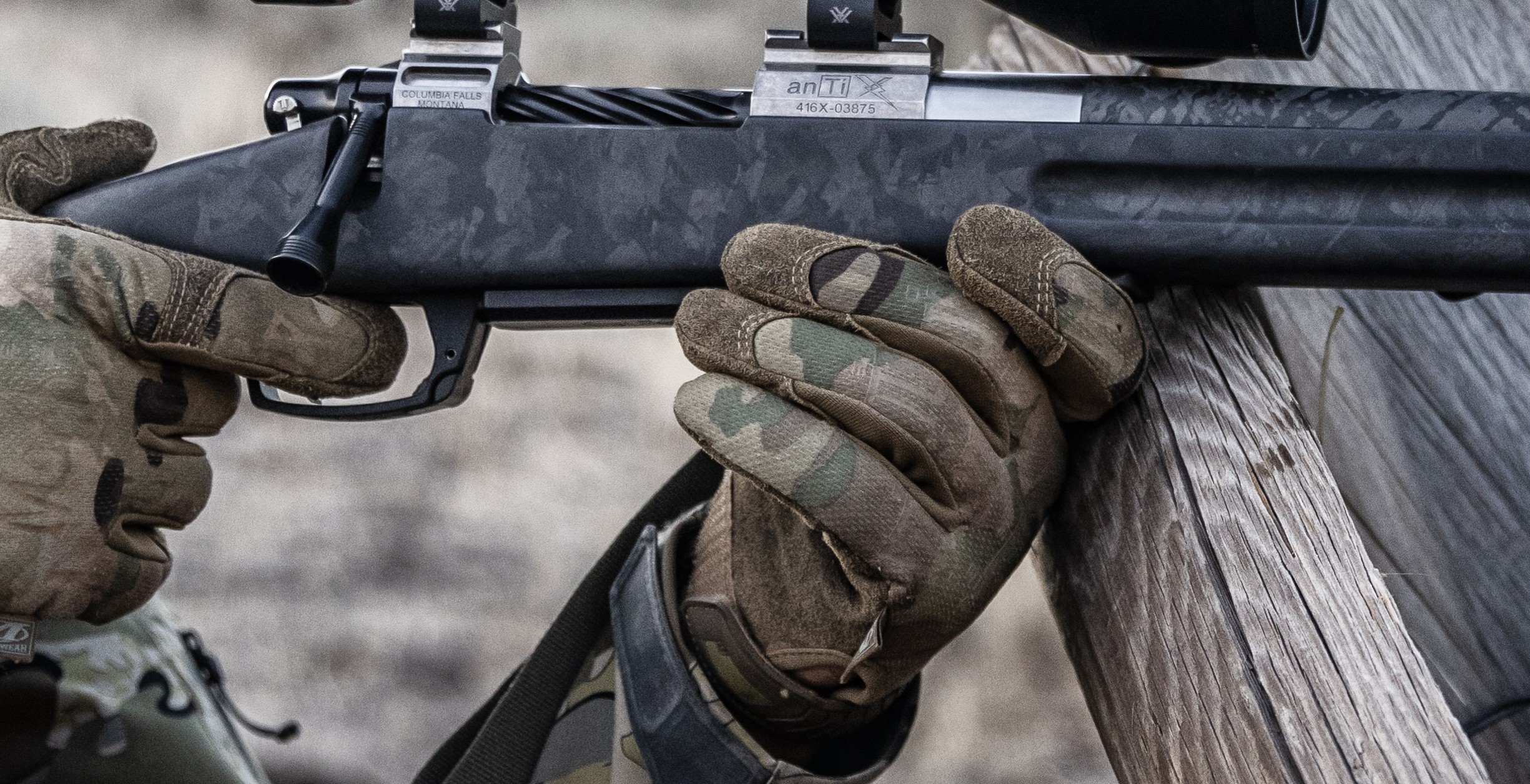
- Overtravel (extra trigger movement after the shot has already fired) – minimal movement after the break prevents the shooter’s finger from continuing to move (and potentially disturbing the rifle) after the shot has already fired.
- Reset (how far forward the trigger must move before it’s ready to fire again) – a short, positive, tactile reset allows for faster, more consistent follow-up shots.
- Take-Up (the free slack in the trigger before it engages the internal firing mechanism) – the amount of slack before engaging the sear should be minimal and consistent.
- Trigger Pull Geometry (Blade Shape & Angle) – curved vs. flat blade, and the angle relative to the bore line, affects how the shooter engages the trigger.
- Durability Under Cycle Count – the trigger must hold its pull weight and feel consistent over tens of thousands of cycles.
- Resistance to Environmental Factors – coatings and material choice (e.g., nickel-boron, stainless internals) ensure the trigger doesn’t gum up, corrode, or change feel in cold, heat, dust, or moisture.
Optics and Mounting
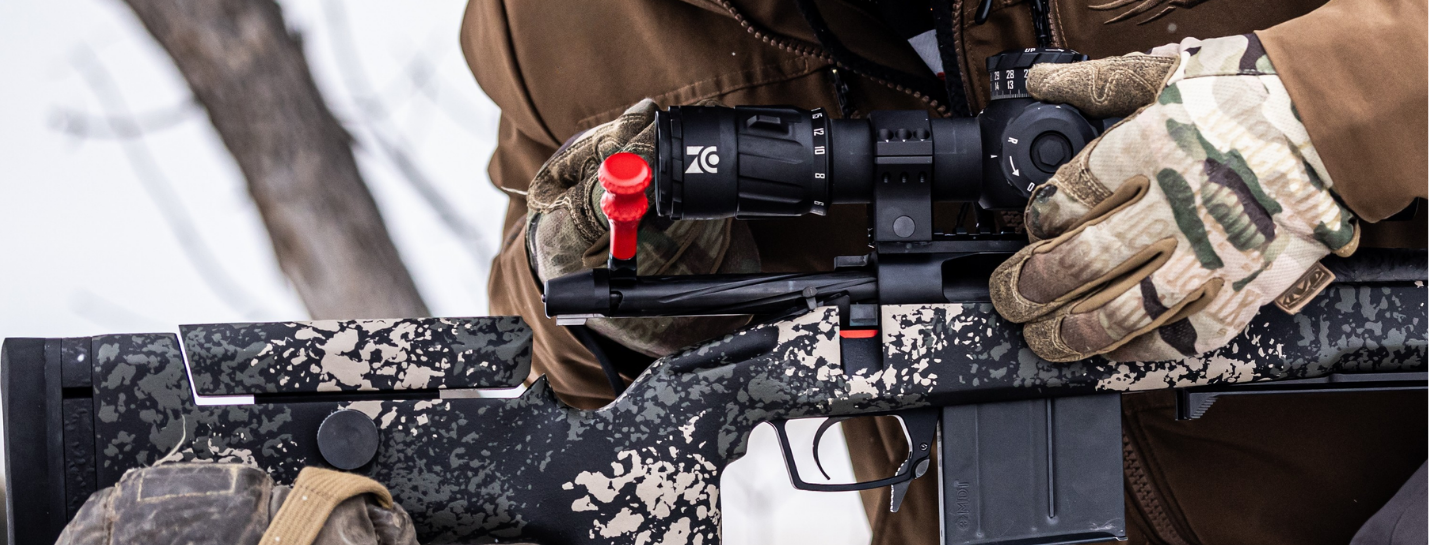
Optics and mounting link the shooter’s intention to the result. A quality scope must return to zero reliably and track elevation and windage precisely, so dialed corrections translate exactly to impact at any distance. Mounts that are rigid and properly torqued keep the scope aligned with the bore under recoil. Proper eye relief (the distance your eye needs to be from the scope’s rear lens to see a full, clear image), leveling, and parallax adjustment work to avoid cant (tilting the rifle off level, left or right), ensuring the rifle’s precision is fully realized downrange.
Material
- Main Tube – high-end precision rifle scopes commonly use aircraft-grade aluminum alloys such as 6061-T6, with some manufacturers using other aluminum alloys or specialized constructions. The tube may be machined from solid billet or manufactured using other precision methods; material selection, wall thickness, geometry, and construction all contribute to mechanical rigidity and environmental stability.
- Lenses – premium riflescopes use multiple grades of optical glass selected for properties such as transmission, dispersion, refractive index, and color performance. Some manufacturers use high-transmission SCHOTT HT/HTUltra glass or other specialized optical materials. Individual elements are typically treated with multilayer anti-reflective coatings to reduce reflection and improve overall system transmission and contrast.
- Internal Erector System (the internal assembly of lenses and tubes that moves the point of aim when you turn the turrets) – the mechanical parts that govern magnification and windage/elevation adjustments; the erector tube and zoom ring often utilize brass on critical moving contact surfaces to ensure smooth, non-binding adjustments over thousands of cycles.
- Turrets & Knobs – typically constructed from hardened aluminum or steel, and sometimes reinforced with bronze or stainless steel, internal mechanisms for tactile, repeatable, and rugged point of aim adjustments.
Manufacturing
Builders construct precision optics through multi-stage lens grinding and multi-coating to maximize light transmission and minimize distortion. Internal components, erector system, turrets, and reticle are machined to micron-level tolerances, so adjustments track true and repeatably return to zero. Typically, the tube is machined from a single billet of aircraft-grade aluminum, then nitrogen-purged and O-ring sealed for waterproof, fog-proof, shockproof performance. Mounting rings and bases are CNC-machined from aluminum or steel billet to tight tolerances, ensuring a rigid, precisely aligned interface with the rifle’s rail that won’t shift under recoil.
Technical Factors That Matter Most
Optics
- Glass Quality & Lens Grinding – precision-ground lens curvatures and low-dispersion (ED) glass minimize chromatic aberration (color fringing that blurs the image, especially at higher magnification) and maximize resolution and light transmission edge to edge.
- Optical Coatings: multi-coated lenses (anti-reflective, often on every air-to-glass surface) maximize light transmission and reduce glare, critical for low-light performance and image clarity.
- Erector System Tolerances – the internal erector tube and lens assembly must move with micron-level precision so windage/elevation adjustments track exactly and repeatably return to zero, this is arguably the most critical mechanical tolerance in a scope.
- Turret Repeatability – turrets must click to precise, consistent increments (e.g., 0.1 mil or 1/4 MOA) with no slop or backlash, ensuring dialed corrections match actual point-of-impact shift.
- Reticle Manufacturing & Placement (reticle is the crosshair pattern etched or set inside the scope) – reticles (etched glass or wire) must be precisely centered and, for first-focal-plane scopes, accurately scaled so holdover/ranging marks stay true at all magnifications.
- Sealing & Purging – nitrogen or argon purging combined with O-ring seals prevents internal fogging and moisture ingress across temperature and altitude changes. This is what keeps a scope clear when you’ve hiked from a cold truck into warm air, or sat glassing through a rainstorm, exactly the conditions that ruin a hunt or a match for a scope that isn’t sealed right.
- Recoil & Shock Resistance – internal components must survive repeated, sustained recoil impulses without shifting zero or damaging lens coatings/seals.
- Parallax Adjustment Precision (parallax is the aiming error that occurs when the target image and the reticle aren’t sitting on the same focal plane) – accurate parallax correction (via side-focus or objective adjustment) ensures the reticle and target image align on the same focal plane, reducing aiming error at varying distances.
Mounting
- Ring/Base Machining Tolerances – CNC-machined rings and bases must hold tight tolerances (often ±.001″) so the scope sits perfectly aligned with the bore axis with zero induced stress on the tube.
- Material Rigidity – aluminum or steel construction must resist flexing or shifting under recoil, ensuring the scope-to-bore relationship stays constant shot after shot.
- Torque Specifications & Clamping Consistency – rings must clamp with even, specified torque to secure the tube without crushing it (which can bind the erector system) or allowing slippage under recoil. See manufacturer for exact values.
- Rail/Base Interface Fit – precise mating between the mount and the rifle’s rail or receiver (e.g., Picatinny, dovetail) minimizes play or shift that would otherwise change point of impact.
- Return-to-Zero Reliability – for quick-detach or modular mounting systems, the mechanism must return to the exact same position every time it’s removed and reinstalled. That’s what lets you pull a scope for travel or storage and go straight back to shooting your zero instead of burning a box of ammo confirming it.
The Stock/Chassis
The stock is the interface between the shooter and every other component of the rifle. Its job is threefold:
- Provide a stable, consistent bedding surface for the action, so recoil forces are transferred the same way every time.
- Manage flex and movement under recoil through ergonomic design using specific materials. The difference between premium and high-volume stocks in this area is significant.
- Fit the rifle to the shooter by adjusting length of pull, comb height, cast, and grip angle so they can settle into a repeatable, natural shooting position without having to fight the rifle.
A custom stock doesn’t make bad components good, but what it does is remove the variability that a factory stock introduces: stress points, warping, poor bedding contact, and ill-fitting ergonomics that cause the shooter to compensate differently shot to shot.
Material
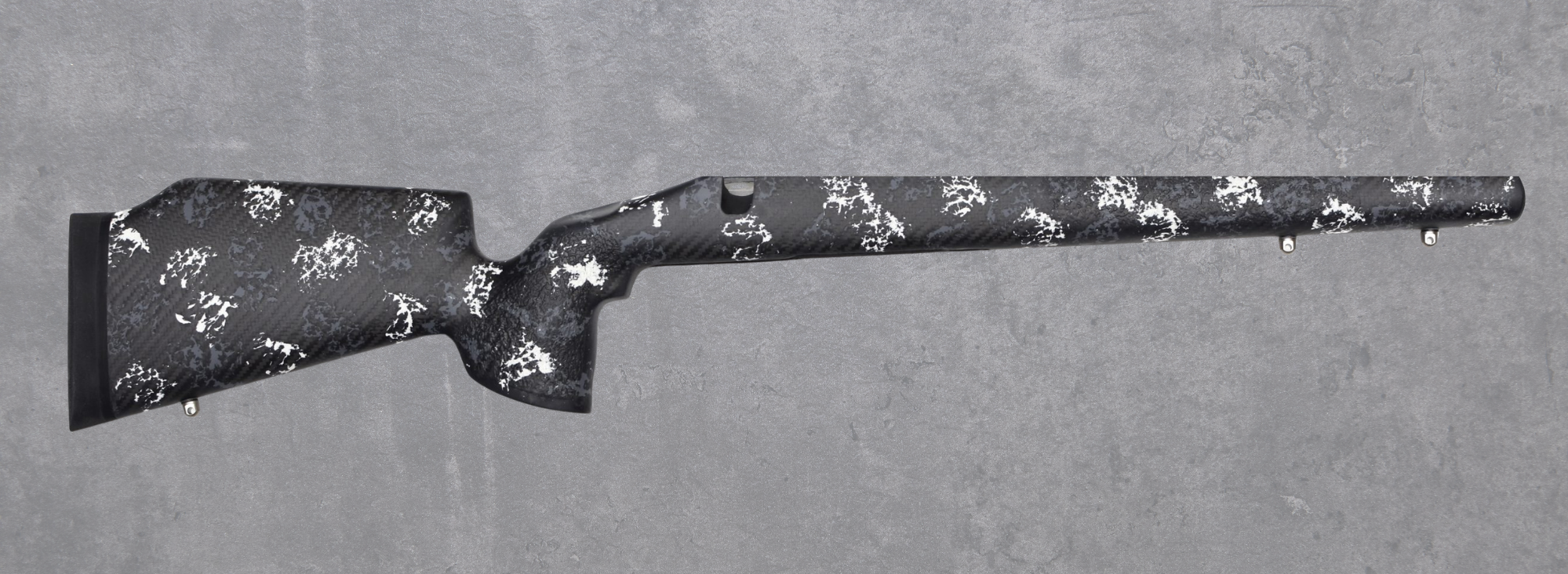
- Carbon Fiber – composite is a fabric infused with epoxy molded around a lightweight core, offering high resistance to warping and temperature changes. Carbon fiber is lighter and stronger than fiberglass, but more expensive. This is the stock for the shooter who feels every extra pound on the mountain, less weight to carry means more energy left for the shot when you finally get there. When a carbon fiber stock includes machined-in aluminum pillars, it has the same mini-chassis bedding benefits and can be built as an universal-fit stock accepting more than one action footprint, the same action-swap flexibility as a dedicated aluminum chassis, just in a lighter shell.
- Fiberglass – is used in the same way as carbon fiber but is slightly heavier and not quite as strong. Fiberglass delivers immense durability and dampens recoil while being more affordable than carbon fiber. This is the stock that shrugs off truck beds, rocks, and rough handling for years, proven, durable, and built for shooters who’d rather spend their budget on optics or ammo. The same holds true for fiberglass: with machined-in aluminum pillars, it has those same mini-chassis benefits and can be built to accept more than one action footprint, giving you aluminum-chassis-level flexibility at a fiberglass price.
- Aluminum Alloy – is used in machined-in pillars (which offer benefits comparable to a mini chassis) and internal chassis skeletons (typically 6061-T6 or 7075 grade), aluminum allows for the use of different action configurations in the same stock or chassis. This is what lets you swap actions or reconfigure a chassis build down the road without starting over from scratch.
- Laminated Wood – uses multiple layers of hardwood that are dyed and bonded with epoxy under extreme pressure, making it stable and more resistant to warping than standard solid wood. This is the pick for the shooter who wants a classic look and feel at the bench without giving up the stability a plain wood stock can’t hold.
Manufacturing
Manufacturing processes vary depending on the material used, and each one is chosen for how it performs in your hands, not just how it looks on a shelf.
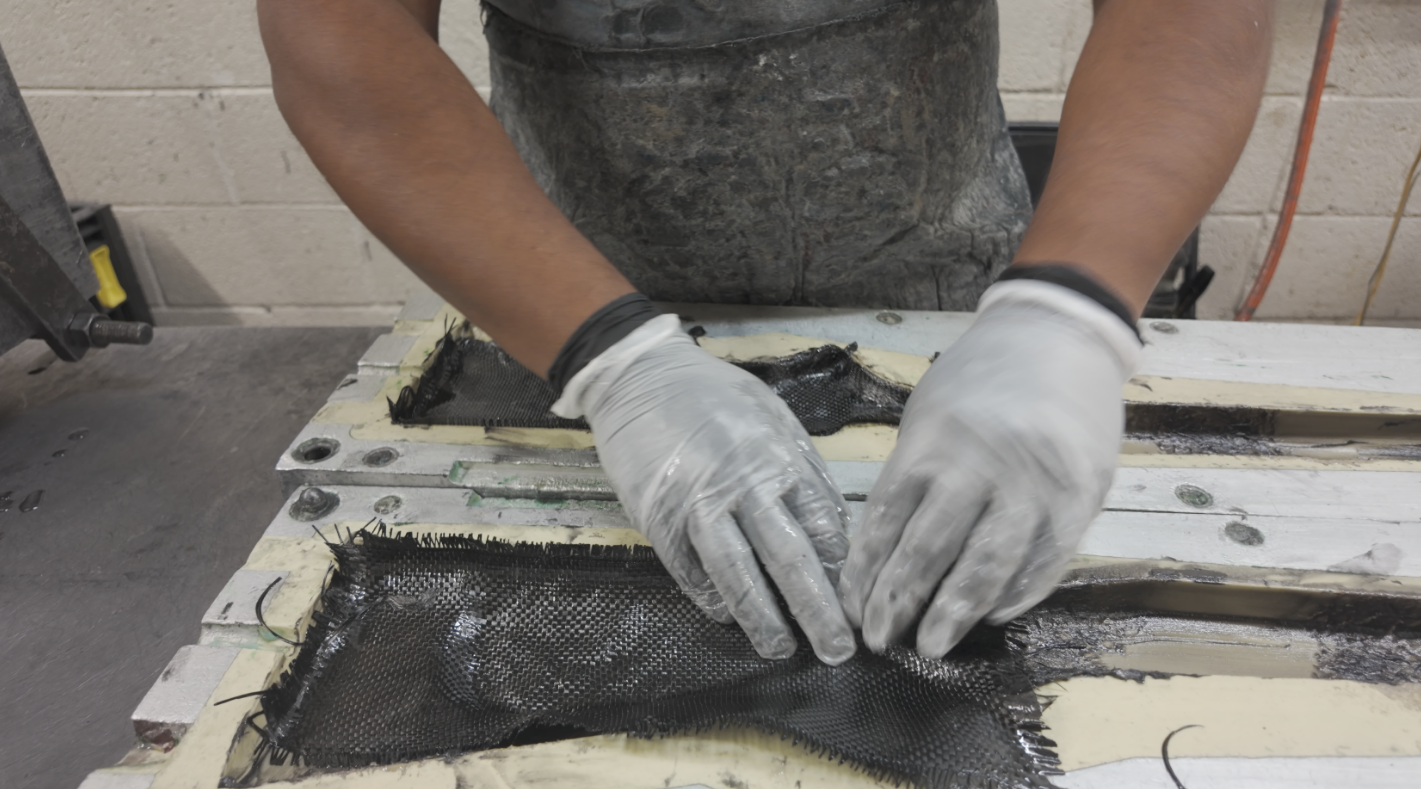
- Carbon Fiber – layers of woven carbon fiber are resin-infused and hand-laid into a mold, then cured into a rigid, lightweight shape that won’t warp or flex over time, the result is a stock that shaves weight off your total rifle build without sacrificing the stability you need for a repeatable zero, ideal for shooters who log serious miles in the mountains or the field.
- Fiberglass – layering resin-saturated fiberglass cloth into a mold, compressing the material to remove excess resin and air, and curing it into a tough, stable shell, giving you a durable, weather-resistant platform that holds up to hard use year after year, at a weight and cost that make it the proven choice for hunters and competitors alike.
- Aluminum Alloy Chassis – CNC-machined from a solid billet of 6061-T6 or 7075 aluminum into a chassis or bedding skeleton, creating a rigid platform, the kind of dimensional consistency that keeps your action stress-free and your point of impact locked in, shot after shot, which is why precision and tactical shooters trust it when consistency can’t be negotiated.
- Laminated Wood Stocks – manufactured by gluing multiple thin layers of hardwood veneer, often in alternating dyed colors, under high pressure and heat, producing a dense, warp-resistant blank that’s then CNC-shaped and finished into the final stock. That layered construction is what gives you a wood stock that holds its zero closer to a synthetic stock than a traditional one-piece wood stock ever could, without giving up the look on the bench.
Technical Factors That Matter Most
- Dimensional stability – varies substantially by material and construction. Properly engineered carbon fiber and fiberglass composite stocks generally exhibit much less dimensional change from environmental temperature and humidity variations than solid-wood stocks. Wood is hygroscopic (absorbs and releases moisture from the air) and can swell, shrink, or warp as its moisture content changes, potentially altering bedding or barrel contact and shifting point of impact between different environmental conditions. Composite stocks are not completely immune to thermal or moisture-related movement, but their construction can provide substantially greater environmental stability.
- Stock stiffness/flex – often measured qualitatively by builders as resistance to torque at the forearm and wrist. A stiff forend resists the shooter’s grip pressure and sling tension from changing barrel harmonics; softer synthetic or thin-walled stocks can flex enough under hand pressure to shift point of impact by a minute of angle or more at distance. That’s a shift you’re causing with your own grip, not the wind or the load, and you’d never know it without shooting off a stock stiff enough to take your hand out of the equation.
- Weight Distribution – precision stocks are engineered to a weight desirable for its usage. Lighter stocks for carry-heavy applications and heavier stocks for recoil control. They are also designed around a balance point, typically dialed in to within a few ounces relative to the action, ensuring the rifle carries and settles consistently every time it’s shot.
- Bedding & Inletting Precision – inletting tolerances are often held to a few thousandths of an inch. Poor mating surface creates torque on the action when the barreled action is torqued down, warping the receiver and degrading accuracy. A poor inlet stresses the action every time you torque the screws down, so you’re fighting the stock before you’ve fired a single round, and no amount of good ammo or a steady trigger pull can undo that.
- Barrel Channel / Free-Float Clearance – consistent, adequate clearance around the barrel prevents contact with the stock from influencing barrel harmonics as it heats and vibrates. Anything touching the barrel will affect its consistency in unpredictable ways. It is best to let the barrel move freely through each shot.
- Thermal & Environmental Stability – materials must resist expansion, contraction, or warping across temperature swings and humidity. This is what keeps your zero from wandering between a cold morning in a stand and a hot afternoon at the range, so you’re not re-confirming it every time the weather changes.
- Action Screw Torque & Fastener Engagement – mating surfaces and action screw pillars must be engineered to handle repeated torque cycles without deforming.
- Recoil Dampening / Vibration Control – material choice and layup influence how the stock absorbs and dissipates recoil energy and harmonic vibration. Better recoil management means less punishment on your shoulder round after round, so your fundamentals hold up through a long string at the bench or a full day in the field instead of breaking down.
- Ergonomic Geometry – length of pull, comb height, cast, and grip angle must be manufactured to precise, repeatable specs (often adjustable) so the shooter can achieve a natural, consistent position behind the rifle. Your fit to your rifle needs to feel natural. Features can be identified by a number but with the stock being the connection between you and your results, it simply needs to feel right, to you.
So Back to the Question
So back to the question I get almost every week: “If I get a custom stock, will my rifle shoot better?”
By now you can see why the honest answer is “it depends on everything else, too.” Precision isn’t the barrel, or the action, or the trigger, or the glass, or the stock. It’s all five systems holding their tolerances together, shot after shot, so nothing in the chain is the reason a good shot goes wide. A match-grade barrel needs a trued action to leave from. A trigger needs to break clean without disturbing what the optic is telling the shooter. And every bit of that is wasted if the stock underneath it all lets the action move even a few thousandths between shots.
That’s the piece I build. Not the whole rifle, just the one component everything else depends on staying still, a rigid, stress-free zero that won’t walk under recoil, won’t creep with a change in temperature, and won’t shift because someone slung it over their shoulder and hiked two miles to a shooting position. Get that wrong, and everything upstream of me, the barrel, the action, the trigger, the glass, is wasted. Get it right, and you’ve removed one more variable between where you’re aiming and where the bullet lands. That’s precision. That’s accuracy. And that’s the standard I build to every single time.

About the Author – Varian Zingaro
Varian Zingaro’s journey with McMillan Stocks began in 2011 on the Hardware team, where he worked hands-on with a manual mill, performing hardware installation and finishing work by hand. That early experience gave him a firsthand understanding of the craftsmanship, attention to detail, and quality standards that define every McMillan stock.
In the years that followed, Varian moved through numerous areas of the company’s production operations, including product development and quality control, building a comprehensive view of the manufacturing process from initial development through final inspection. That foundation carried him into the McMillan management team, where he took on progressively greater responsibility before being named General Manager of McMillan Stocks, a path that gave him rare insight into both the products the company builds and the people and processes behind them.
Beyond the shop floor, Varian is an avid long-range shooter with a genuine personal stake in the products he represents. He runs McMillan stocks on all of his bolt-action rifles and has come to deeply appreciate their performance, durability, and craftsmanship through his own use. Passionate about the discipline of precision rifle shooting, he’s always working to sharpen his skills and deepen his understanding of the technical side of long-range shooting and the equipment that makes it possible.